FinnOne Neo®






 Lending
 Transaction Banking
 Financial Inclusion
 Technology







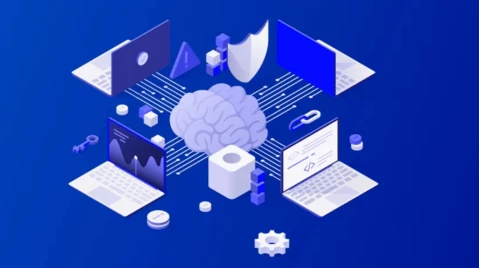
















Agentic AI is redefining how enterprises operate by enabling intelligent systems that can reason, act, collaborate, and make decisions autonomously. Unlike traditional AI models that primarily assist with analytics or automation, Agentic AI introduces goal-driven agents capable of understanding context, interacting with tools, and executing complex workflows with minimal human intervention.
This whitepaper explores how AI agents are transforming enterprise operations through enhanced automation, contextual understanding, multi-agent collaboration, and intelligent decision-making. From streamlining expense management and DevOps processes to enabling autonomous software development workflows, Agentic AI helps organizations improve efficiency, scalability, and responsiveness across business functions.
The paper also highlights the architectural foundations of building effective agentic systems, including planning and reasoning, memory management, orchestration layers, tool integration, observability, and human-in-the-loop controls. It further examines how enterprises can transition from traditional AI frameworks to modular, multi-agent ecosystems that support dynamic workflows and adaptive operations.
As enterprises adopt Agentic AI, security and governance become critical. The whitepaper addresses major challenges such as prompt injection, data leakage, model drift, unauthorized access, and hallucinations, while outlining mitigation strategies including RBAC, prompt validation, sandboxing, logging, and continuous model retraining.
By combining intelligent automation with governance and scalability, Agentic AI is emerging as the foundation for autonomous enterprise intelligence. Organizations investing in secure, well-governed agentic architectures today will be better positioned to drive innovation, operational agility, and competitive advantage in the future.
Download the whitepaper to learn more.